

impact of flex cycles on flexible PCBs
The design of wearable devices requires flexible circuitry to accommodate a variety of shapes and sizes while still providing a robust platform for sensors, microcontrollers, batteries, and other components. These wearable electronics must be able to adapt to the user’s environment, which can include everything from sweat to extreme temperatures. These factors can pose challenges for rigid-flex PCBs, but the right materials and design techniques help them deliver durable and reliable performance.
Rigid-flexible pcb are a key component in many advanced products, including smartwatches on wrists, 3D printers, and assistive technology for patients in hospitals. They offer benefits like increased dependability, three-dimensional connections, and reduced assembly costs and weight by replacing bulky wires. However, implementing flexible PCBs in these applications is not without its own set of unique challenges.
One of the main challenges is ensuring that the board remains strong and reliable even when subjected to repeated bending and flexing. To do this, the conductive paths must be carefully engineered and routed to avoid mechanical stress. The material selection of both the rigid and flexible sections of the circuit must also take into account the thermal expansion and contraction rates of different types of materials. In addition, signal integrity and electromagnetic interference (EMI) must be considered in both the rigid and flexible portions of the circuit.
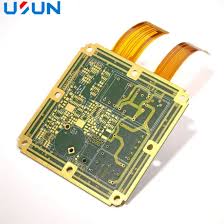
What is the impact of flex cycles on flexible PCBs?
To prevent damage during flexing, a layer structure with high copper thickness and low voids is important. Additionally, conductors should be routed perpendicular to the neutral axis of the bend. This reduces the strain on traces during the flexing cycle. To further minimize damage, the flex PCB must be designed with adequate air-gaps between layers and conductors.
In multilayer flex boards, a dielectric stiffening layer is sometimes added to the flex circuits to reduce buckling and wrinkling during bending cycles. This is especially crucial for high-frequency flex circuits, where shorter signal paths are critical. Additionally, a flexible solder mask and thermally protective adhesives must be used to ensure proper insulation and protection.
Cost optimization is another critical challenge for flexible PCBs, which must be balanced against quality and reliability requirements. A collaborative approach with suppliers and factories can help manage cost savings. They can suggest cost-effective materials, recommend efficient manufacturing processes, and standardize designs to streamline production.
Cost is a significant factor influencing the adoption of flexible PCBs. The manufacturing process for flexible PCBs is generally more complex and expensive than that for rigid PCBs. The materials used, such as polyimide and flexible copper, are also more costly than the fiberglass and copper used in traditional PCBs. Additionally, the need for specialized equipment and processes, such as precision etching and lamination, further drives up production costs.
For example, manufacturers of flex PCBs for medical devices can use ultra-thin substrates to reduce overall board size and improve bending capabilities. This allows them to fit the circuitry into tight spaces for patient comfort and convenience while still meeting strict medical industry standards for safety, functionality, and performance.


