

A group of School of Visual Arts (SVA) students and alumni staged a moving pro-Palestine demonstration last night, May 16, during an exhibition opening at the institution’s Flatiron Gallery in Manhattan. For over 45 minutes, the activists read the names and ages of children killed in Gaza since Hamas’s October 7 attack, demanding the school’s divestment from Israeli military interests.
The sit-in began at 6:55pm, a few minutes before the public reception for How Do You Like Your Love was scheduled to end. The show comprises faculty and alumni work exploring themes of queerness, gender, and race, some created by artists who participated in last night’s sit-in.
Around 10 activists dispersed throughout the gallery’s lobby and its larger viewing space, where a student show is on display, and entered the tiny street-facing room housing the How Do You Like Your Love exhibition while throwing red confetti into the air. Three alumni took seats on the floor. Behind them, activists held three squares from the pro-Palestine quilt that was unfurled in March on the steps of the Metropolitan Museum of Art. After a moment of silence, protesters distributed red tissue paper in the shape of poppies, a symbol of Palestine, each with the handwritten name and age of a person killed in Israel’s ongoing bombardment of Gaza. Most ages read “3” or “16.” One read “0.”
Organizers made clear that the action was not in protest of the show or its curators, but rather the school’s administration. While some universities across the country have reached agreements with student activists on the question of divestment, SVA has not. The school has not responded to Hyperallergic’s immediate request for comment.
“The school had just made a statement after the atrocities of the seventh of October, but nothing since, which seems wrong and one-sided,” an alumnus with work in the show, who asked to remain anonymous, told Hyperallergic. “They’re pretending to be neutral, but you can’t do that and then claim to be neutral.”
The alumnus said they contacted the SVA branch of Students for Justice in Palestine (SJP), the group behind many of the student protests and encampments across the country. Earlier this month, the organization’s SVA chapter staged a sit-in and action at the school’s administrative offices.
Rebecca Goyette, who graduated in 2009 from SVA’s MFA program, was invited to participate in last night’s protest. Goyette told Hyperallergic she had helped organize the quilt project, which she said continues to grow.
“I really wanted to support the SVA movement — I went here — but I mainly wanted to support some of the smaller movements, especially at the art schools, because I feel like as artists, we’re Here’s one example of what this could look like:
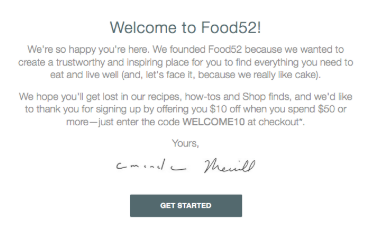
Pro tip: To scale the process, you can use the steps above to create an AI prompt that will generate a first-draft welcome email in seconds.
Just plug your value props, next steps, and CTA into a tool like HubSpot’s Campaign Assistant to get started. You can even use the same prompts to create matching ad copy or landing page content.
Get Started with HubSpot’s Campaign Assistant
How to Write an Employee Onboarding Welcome Email
Welcome emails aren’t just for customers. The onboarding process has a huge impact on how the new employees feel about your company, so it’s important to give it the time and energy it deserves.
One of the important parts of this process is the onboarding welcome email. It has to match the company’s tone and outline all the expectations you have for the new employee.
If this is your first time writing an onboarding email, you’ll find the following steps helpful.
Here are the steps that I follow when writing an onboarding email.
1. Decide on the content of your onboarding email.
Before you start, it’s important that you are aware of the content of an onboarding welcome email.
The contents are going to vary based on the conditions. For example, an email onboarding remote employees is completely different from an onboarding email for an employee who will work onsite.
For an onsite employee, the onboarding email should include:
- Welcome events.
- First-day schedule.
- Arrival instructions.
- How to access their workstation.
- Break room details (where to warm lunch, get coffee, etc.).
- Dress code.
- What they’re required to bring (passport, ID, social security card, or any other paperwork).
- Parking information.
- Contact information.
For a remote employee, the content may include:
- First-day schedule.
- Contact information.
- Signup details for collaboration tools.
- Welcome video conference meeting (time to be held).
Again, you can change the content based on your company’s needs.
2. Decide on the tone you want to use in your email.
The next thing you need to decide on is the tone you want to use in your onboarding email. Do you consider your company friendly, casual, or super formal?
Whatever your answer is, it should be reflected in the tone of the onboarding email. This gives the employee an idea of the kind of workplace environment they should expect.
It also sets the tone your new employee is expected to use when representing your brand.
3. Draft your onboarding email.
The next step is to draft your onboarding email. While the tone of your email might change to fit your needs, here is an example of a template you can use.
Dear [Employee’s name],
We are very excited to welcome you to [company name]. Please remember to carry your ID to get easy access to our premises. We expect you to be in the office by [time], and our dress code is [formal/super casual].
At [company name], we pride ourselves on creating the best environment for our employees. As you‘ll see, our team has already prepared your workstation for you and set up your software to make your first day easy. You’ll also be given access to your designated parking spot, a customized company bag, t-shirt, and mug, among other goodies.
Our team has also planned all the details for your first week to ensure you settle easily. You‘ll receive a document with your schedule and agendas for your first week from HR when you arrive. Human Resources will also help you fill out the required paperwork and answer all your questions. After the meeting with HR, you’ll be assigned a mentor who will show you the ropes of our company and how we get things done.
Our team is excited to meet you during the [planned event].
If you need any clarity before you arrive, please contact me by phone [phone number] or email. I’ll be more than happy to help.
Welcome to the [company name], [employee name]. We are looking forward to working with you and watching you grow and soar to greater heights!
Warm Regards,
[Signature]

4. Edit your email.
After writing your email, make sure you edit it to include all the necessary details.
I always make sure to check for any grammatical errors with tools like Grammarly and HubSpot’s AI Email Writer if a copy needs a refresh. You can also have a colleague double-check the email.
Remember to attach any necessary documents, links, or images as supplemental information.
5. Send or schedule the email.
Lastly, send the email or schedule it so it’s received in a timely manner. For example, you want to avoid sending an onboarding welcome email on Sunday evening, which may give the wrong impression.
This will allow the new employee to be psychologically prepared and find the necessary documents.
Make a Great First Impression
Bottom line? Whether it’s in person, over the phone, or by email, first impressions matter.
Your welcome email is often the first chance a prospective customer or contact has to see what your brand is all about, and if you don’t stick the landing, they’ll likely go somewhere else.
Luckily, writing a great welcome email can be simple. You need to focus on what matters, such as compelling subject lines, great content, personalized offers, and always, always, a way to opt out.
Your first impression can help lay the groundwork for long-term relationships. And, the welcome email examples I have shared in this blog will help you in this process and inspire you to create your own standout welcome emails.





![The HubSpot Blog’s AI Trends for Marketers Report [key findings from 1,000+ marketing pros]](https://www.hubspot.com/hubfs/state-of-AI-1-20240626-53394.webp "The HubSpot Blog’s AI Trends for Marketers Report [key findings from 1,000+ marketing pros]")
![The Tiny Layout Tweak That Led to 20% More Conversions [Test Results]](https://www.hubspot.com/hubfs/rebecca-hinton-social-proof.webp "The Tiny Layout Tweak That Led to 20% More Conversions [Test Results]")